
CEO Blog: What you need to know about the new Ofsted Framework
A useful guide to the newly revised Ofsted framework for Primary School Parents
As I am sure you are aware, Ofsted has introduced a completely revised inspection framework that came into effect from November 2025. The objective of the changes is to give families clearer, more meaningful information about how well schools are supporting all children—particularly those who are most vulnerable. In the framework, the definition of vulnerable children is disadvantaged; those with SEND; those who are known (or previously known) to social care; and those who may face other barriers to their learning and/or wellbeing, e.g. Young Carers.
1. A New Approach to Grading
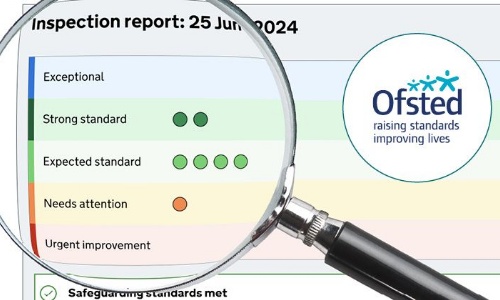
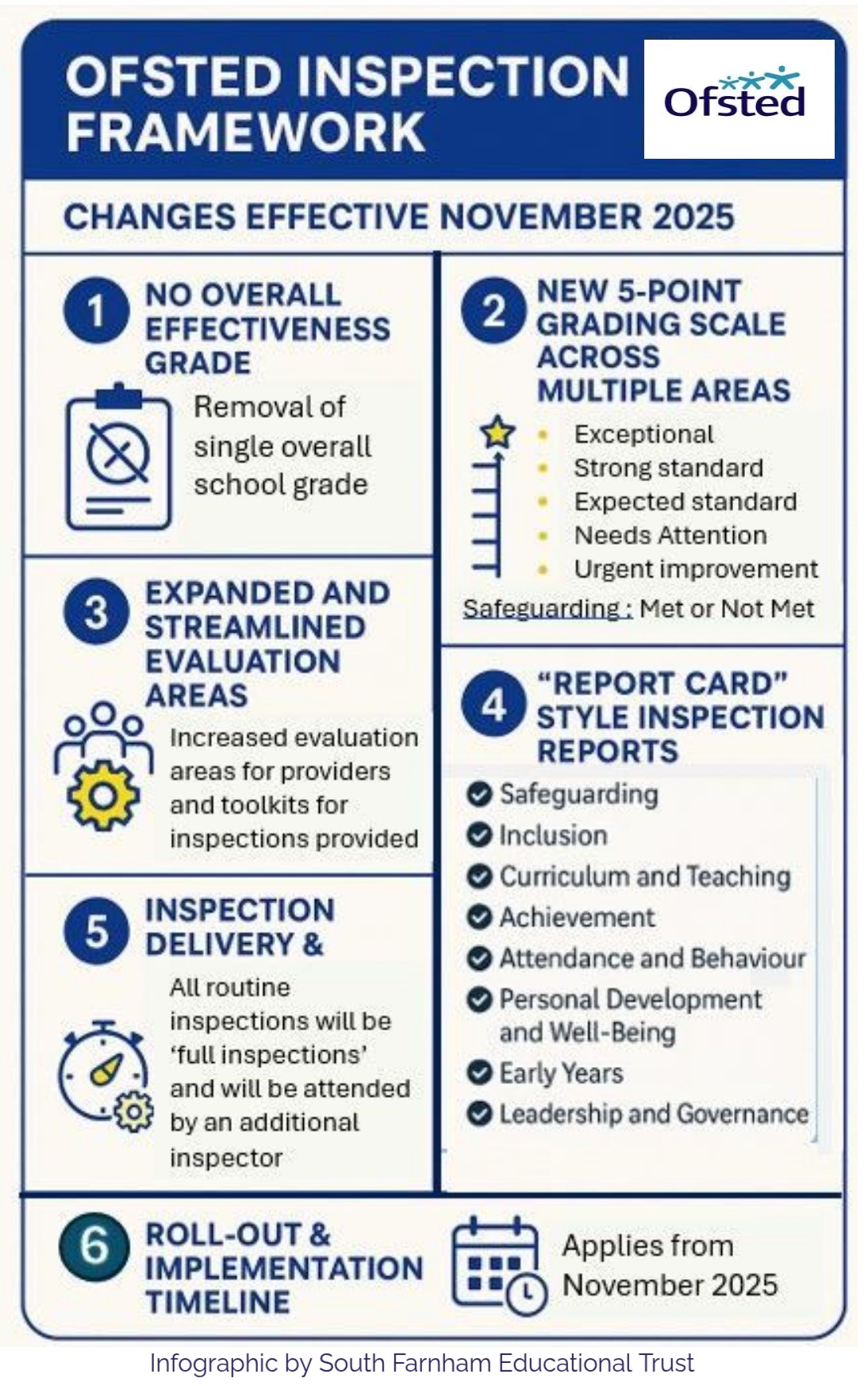
The judgement grades have changed, with schools now receiving a 5‑point grading scale in several different areas, each shown on a new-style report card. These are:
- Exceptional
- Strong Standard
- Expected Standard
- Needs Attention
- Urgent Improvement
There will also be a separate rating for Safeguarding which will be reported as effective (met) or ineffective (not met).
In most schools, the assigned grades will fall within the three middle grades: Needs Attention, Expected Standard and Strong Standard. Exceptional and Urgent Improvement will be used less often. A school judged at the Expected Standard is doing well.
It is important to be aware that previous grades do not translate into the new ones. A school that was previously “Good” will not automatically be ‘Expected’ and a school that was previously ‘Outstanding’ will not automatically be ‘Strong’ as there are raised expectations within each band.
Each area of school life—such as Curriculum & Teaching, Achievement, Inclusion, Attendance & Behaviour, Personal Development & Wellbeing, and Leadership & Governance—is judged separately and there will not be one overall label.
2. Greater Focus on Vulnerable and Disadvantaged Children
A major new emphasis in the framework is how well schools meet the needs of vulnerable children, including those with SEND or additional barriers to learning. Inspection teams now look closely at whether these pupils are thriving—on the basis that if the most vulnerable children are doing well, all children are likely to be successful.
There is also a new standalone Inclusion evaluation area, ensuring that every school is held clearly accountable for how well it supports pupils who need extra help.
3. Strengthening the Foundations in EYFS and Key Stage 1
The updated framework places strong emphasis on the earliest years of learning, including communication, language, early reading, writing, mathematics, and physical development. Schools are expected to ensure that these essential building blocks are securely embedded for all children.
Inspectors now look more closely at how well the curriculum supports long-term learning, especially in early reading and the development of secure phonics knowledge.
4. A “Keep Up” Model, Not a “Catch Up” Model
The framework encourages schools to ensure children keep up with the curriculum rather than falling behind and then trying to catch up later. This includes checking how effectively teachers identify gaps early and how well they adapt teaching so every child progresses with confidence.
This approach particularly supports children who may be disadvantaged, ensuring no child slips behind unnoticed.
5. What This Means for Parents
The new Ofsted framework is designed to:
- Provide a clearer picture of school strengths and areas for improvement.
- Offer more transparency about how well different groups of children are supported.
- Ensure that early learning—especially reading and maths—remains a top priority.
- Helps parents understand not just “how good” a school is, but also why.
In Summary
It is important to note that the inspection criteria and evaluation processes have evolved, meaning outcomes under this framework are not directly comparable with those from previous inspections.
The new framework is more detailed with increased expectations and is more child‑focused, but still responsive to the school context. Its aim is simple: to ensure that every primary-aged child, particularly the most vulnerable, gets the strong start they deserve.
If children who need the most support are thriving, inspectors believe the whole school will be thriving too and that principle sits at the heart of this new approach.
Our Mosaic Schools Learning Trust family of schools have not yet experienced an inspection under this new framework and we would be interested in any feedback you may have following future inspections.
Ofsted Parent View will continue to provide parents and carers with the chance to tell Ofsted what you think of your child’s school at the time of an inspection (and at any time) and we positively encourage your feedback.